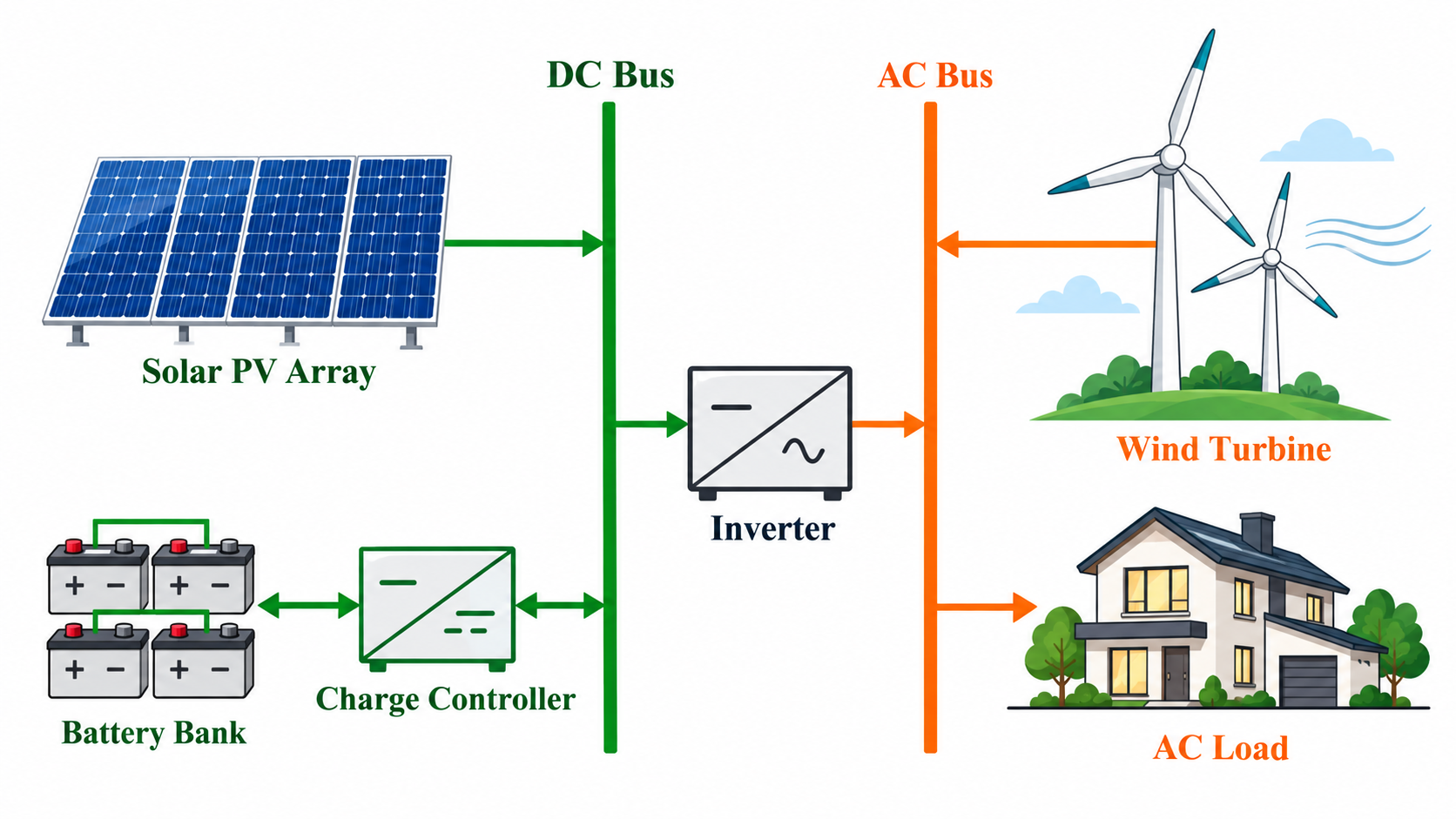
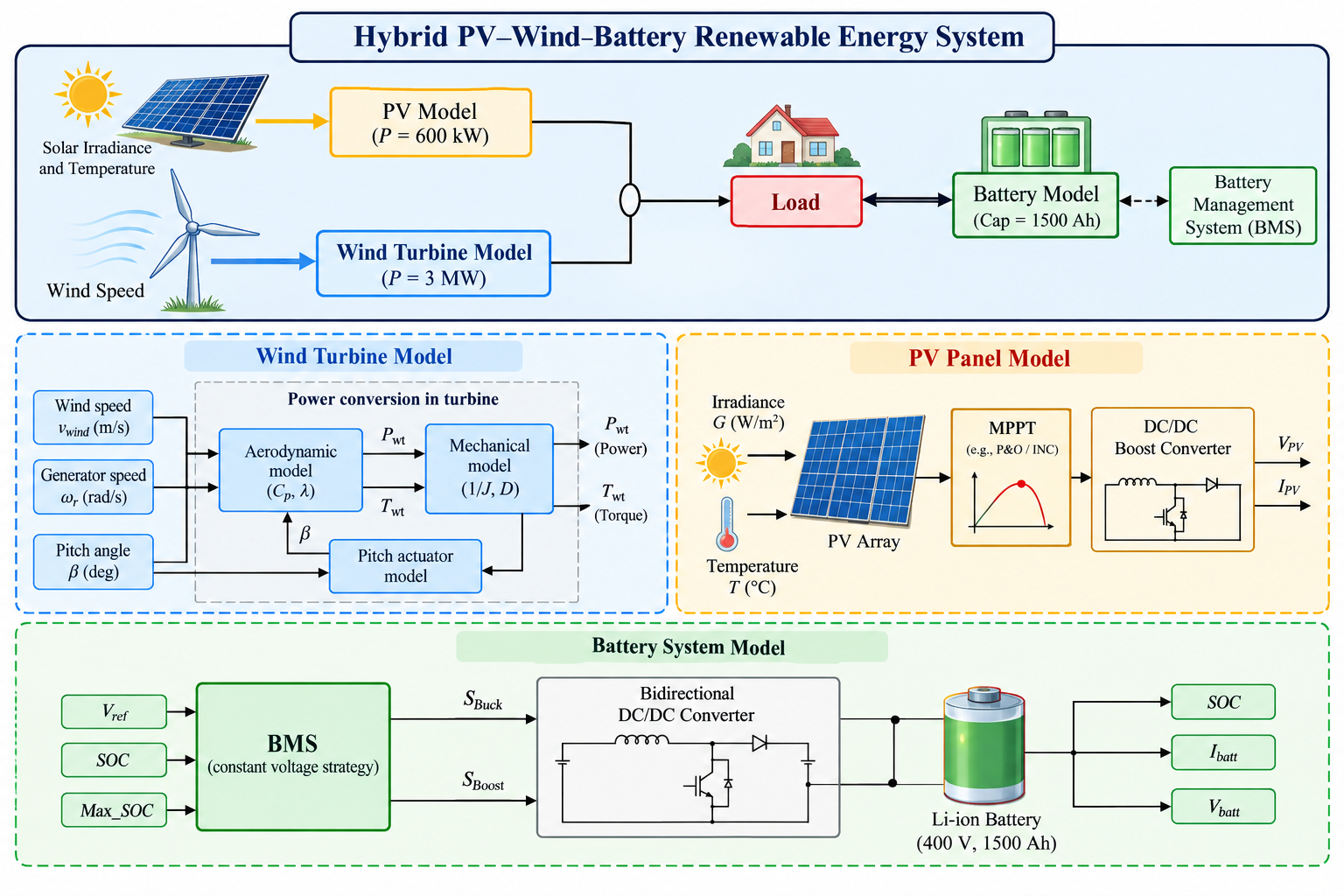
Figure 1. Hybrid PV/wind/battery microgrid, with the PV array and battery bank on the DC bus and the wind turbine and AC load on the AC bus.
A microgrid can only be controlled as well as its inputs can be predicted. My M.Sc. thesis at Amirkabir University of Technology (2022) developed short- and medium-term forecasting models for wind speed, solar irradiance, load, and battery state of charge, and integrated them into the energy management strategy of a hybrid PV/wind/battery microgrid.
Feeding the forecasts into the controller improved the system’s energy efficiency and dynamic control performance compared with operation on measured values alone.
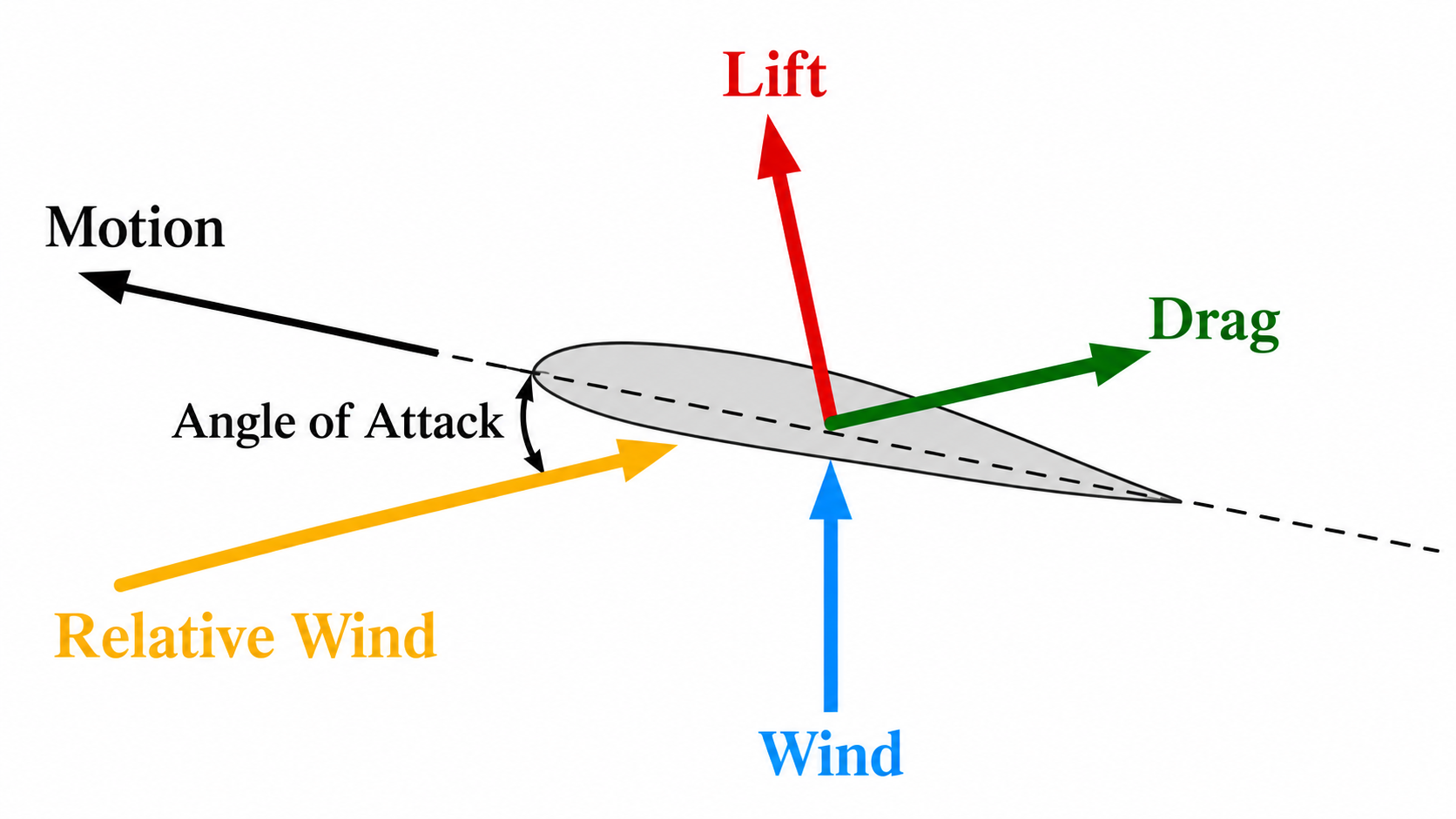
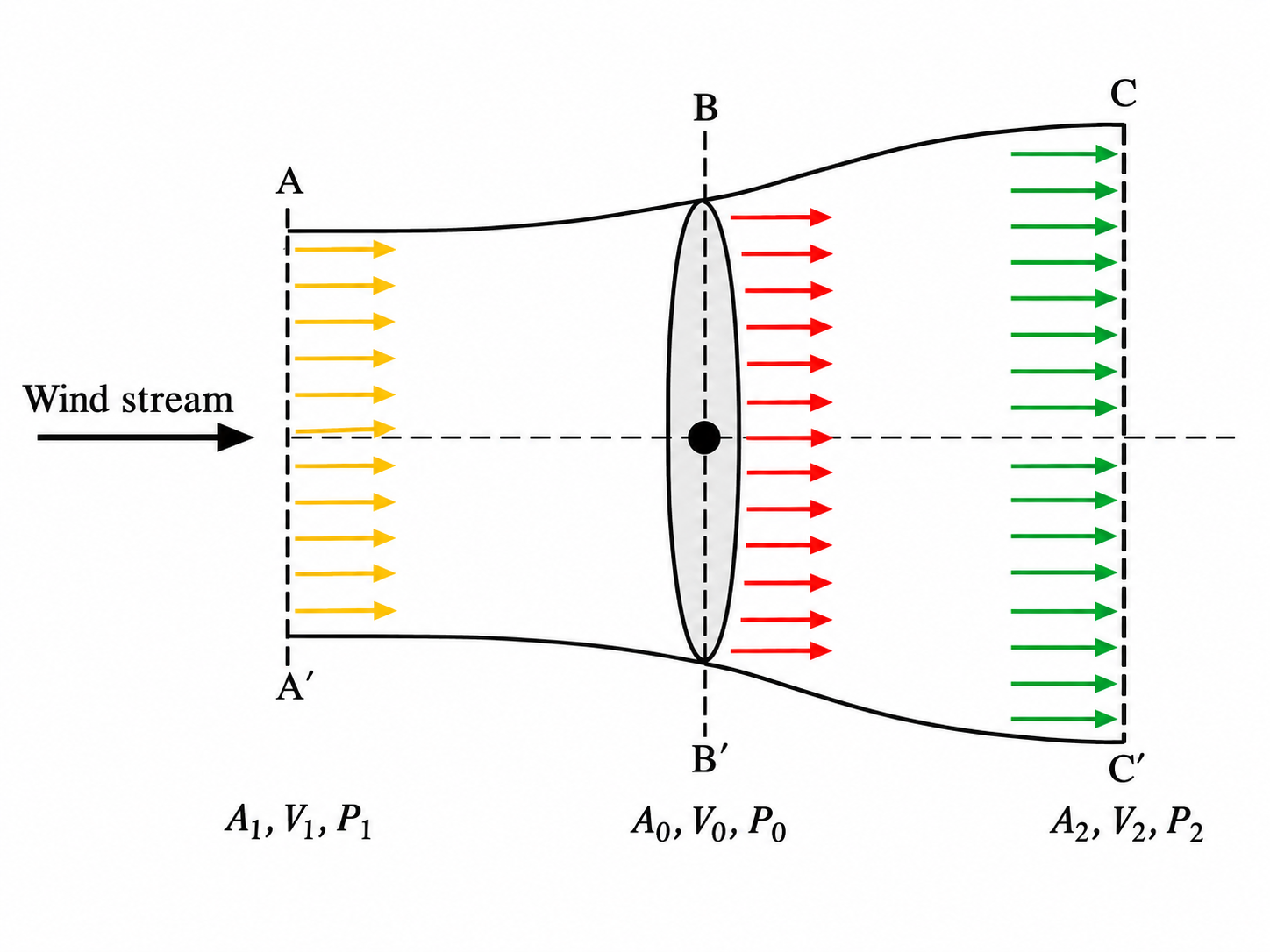
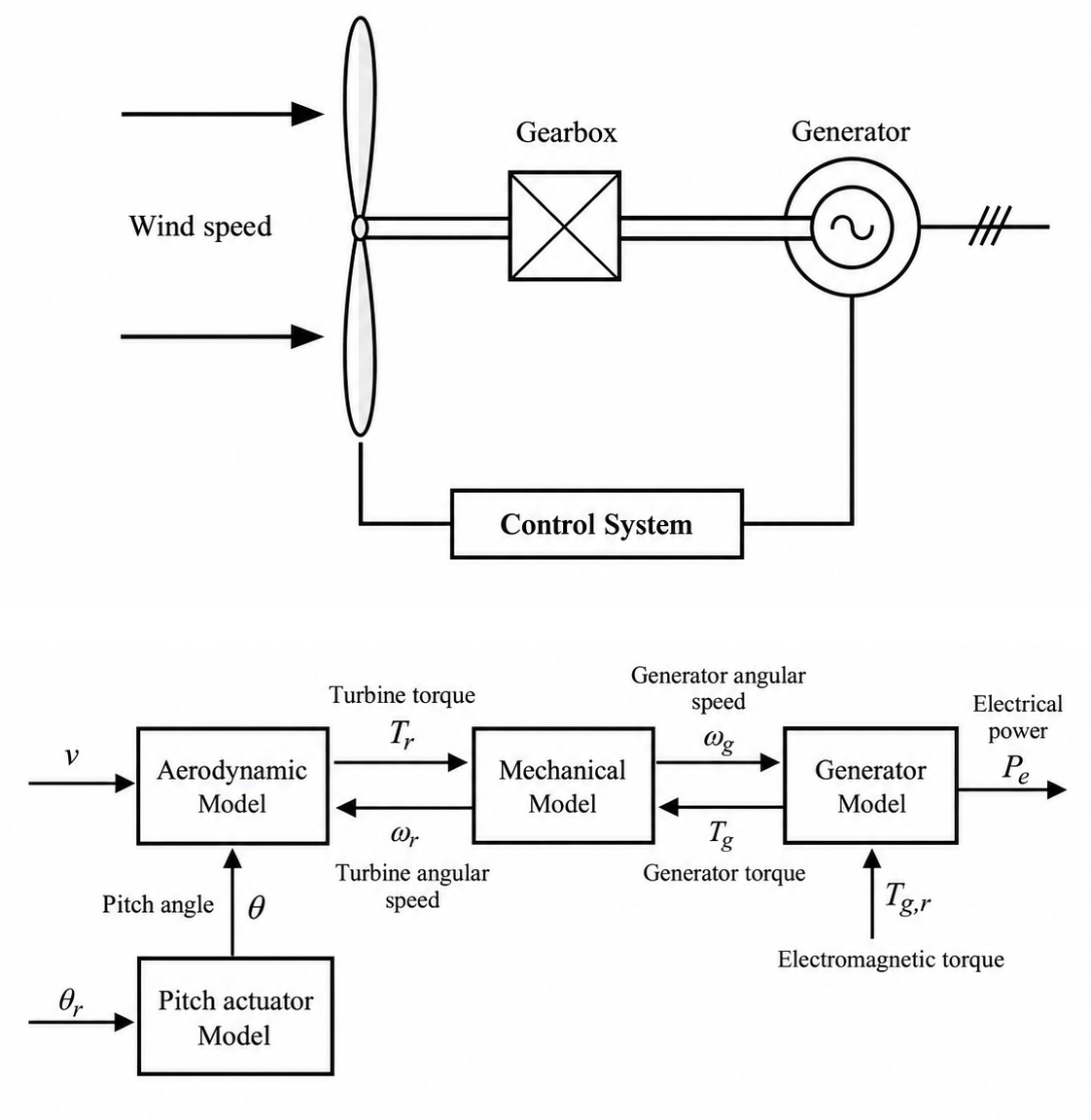
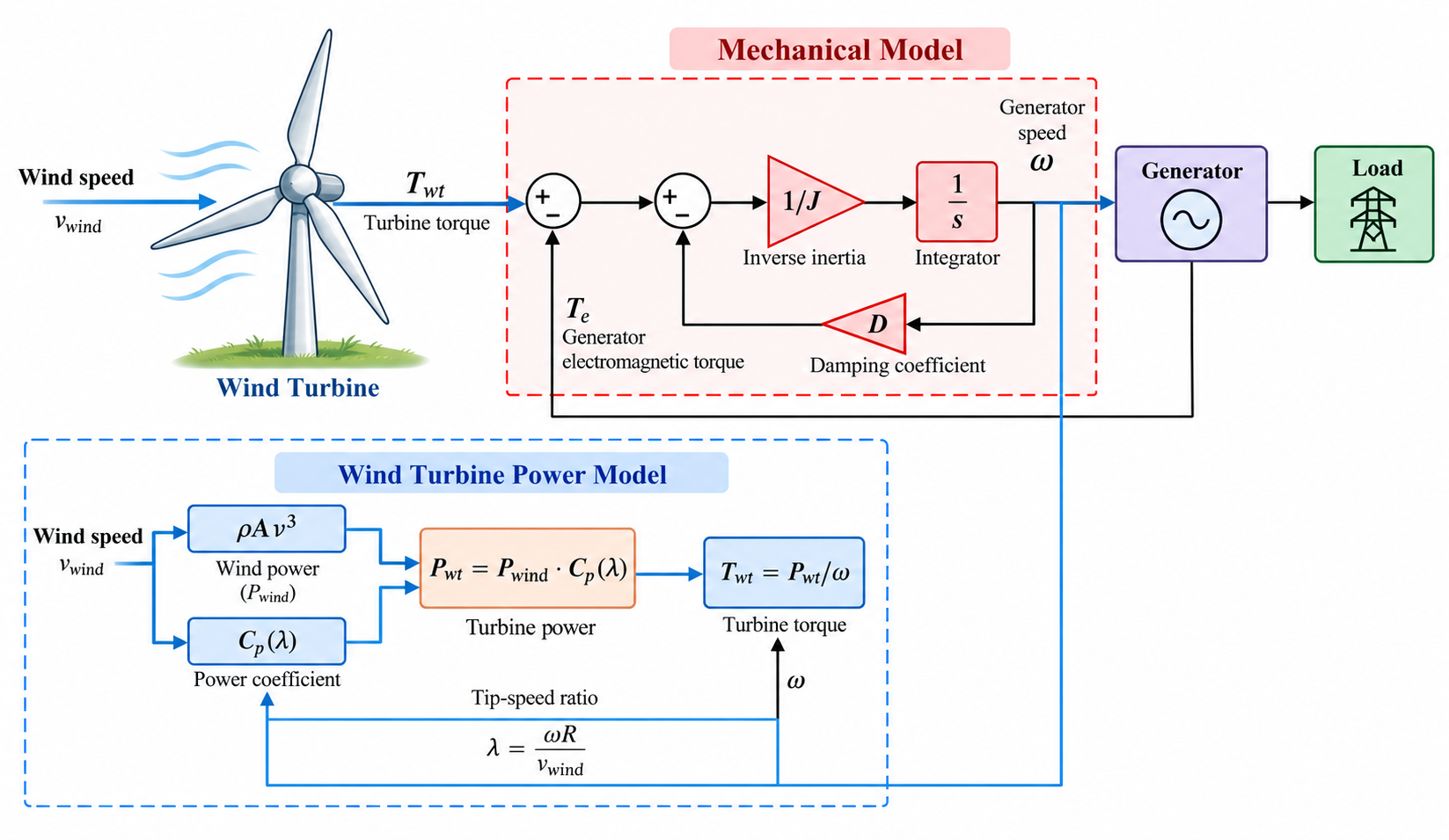
Figure 2. Aerodynamic forces on a turbine blade: lift, drag, relative wind, and the angle of attack.Figure 3. Actuator-disk model of the wind stream through a turbine rotor, with area, velocity, and pressure upstream, at the rotor, and downstream.Figure 4. Wind-turbine energy conversion system and its dynamic model, from wind speed and pitch angle through the gearbox and generator to electrical power.Figure 5. Mechanical and power model of a wind turbine, from wind speed through torque, inertia, and the power coefficient to generator speed and the load.Figure 6. Hybrid PV–wind–battery system model: a 600 kW PV array, a 3 MW wind turbine, the load, and a 1500 Ah battery with its management system.