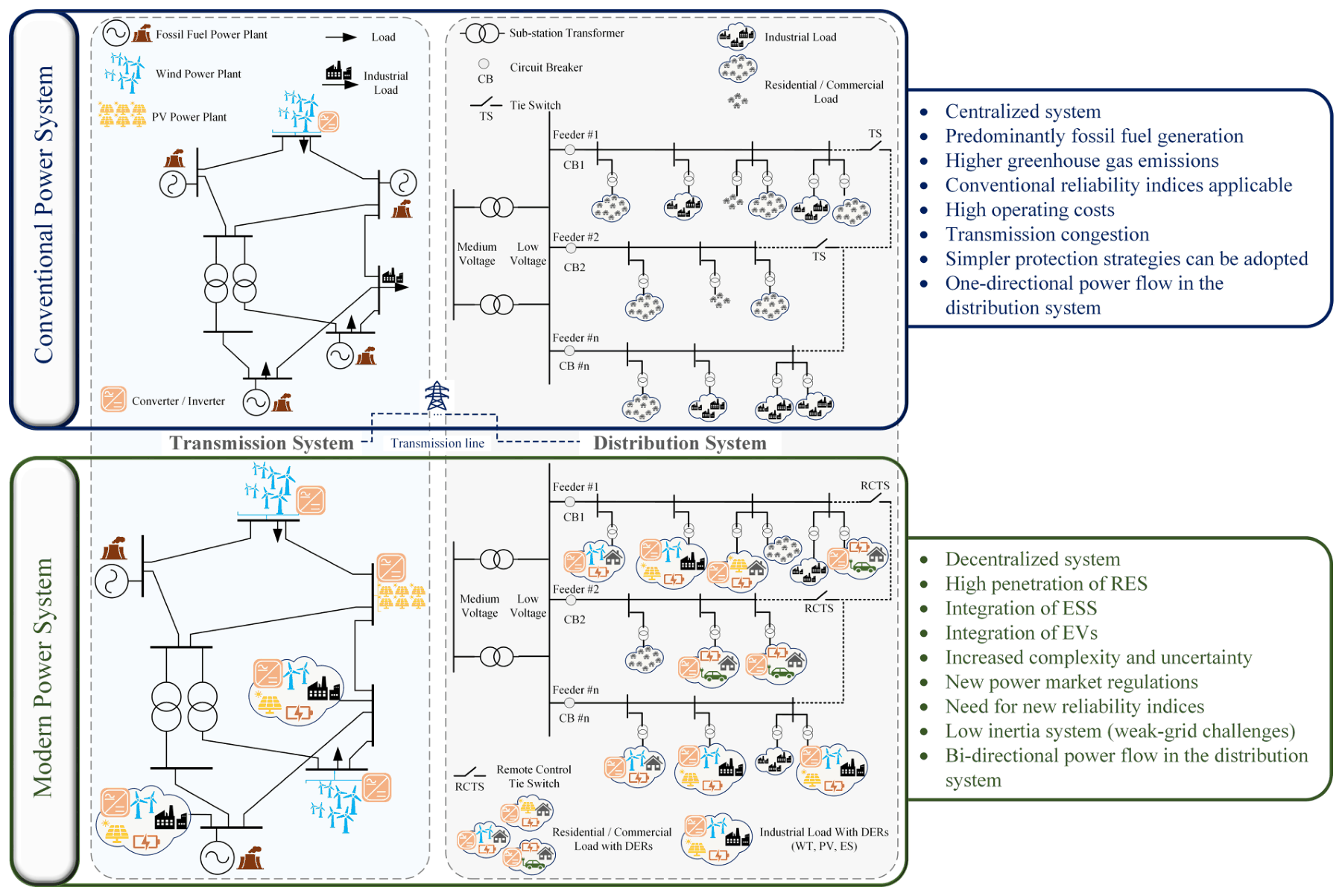
Figure 1. Conventional versus modern power systems: decentralization, high RES and IBR penetration, storage, EVs, low inertia, and bidirectional flows call for new reliability indices.
Source: Energies, 2024.
Inverter-based resources change what reliability means for a power system: low inertia, bidirectional flows, new failure modes in power electronics, and uncertainty that traditional indices do not capture. This project develops stochastic, probabilistic frameworks for reliability and resource-adequacy metrics on grids dominated by IBRs.
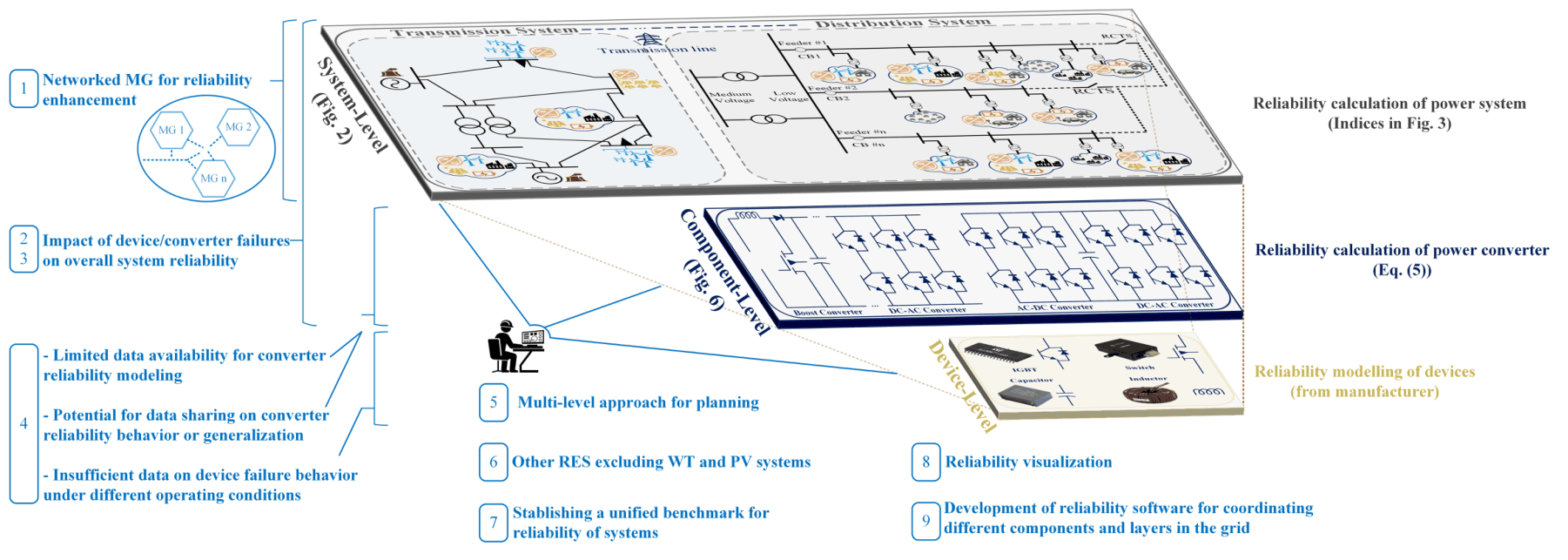
Our survey in Energies reviewed reliability at the device, component, and system levels and argued that these levels must be analyzed together: converter reliability shapes system indices, and system conditions shape converter stress. It catalogs classic indices alongside those newly proposed for IBR-penetrated grids and sets out a multi-level research agenda, including benchmark systems, data sharing on converter failure behavior, and reliability software that coordinates components and layers.
Figure 2. Layers of reliability evaluation, from devices and converters to the system, and the research directions that connect them.
Source: Energies, 2024.
Decarbonization is driving power systems toward more decentralized, self-governing models. While these technologies improve efficiency, planning, operations, and reduce the carbon footprint, they also introduce new challenges. In modern grids, particularly with the integration of power electronic devices and high penetration of Renewable Energy Sources (RES) and Inverter-Based Resources (IBRs), traditional reliability concepts may no longer ensure adequate performance due to systemic restructuring. This shift necessitates new or significantly modified reliability indices to capture the characteristics of the evolving power system. Ensuring converter reliability is essential for effective planning, which requires precise, component-to-system-level modeling, as different converters impact system performance indicators. However, the existing literature in this field faces a significant limitation, as most studies focus on a singular perspective. Some examine reliability at the device-level, others at the component-level, while broader reviews in power systems often emphasize system-level analysis. In this paper, we aim to bridge these gaps by comprehensively reviewing the interconnections between these levels and analyzing the mutual influence of power converter and system reliability. A key point to highlight is that, with the rapid evolution of modern power grids, decision-makers must adopt a multi-level approach that incorporates insights from all levels to enable more accurate and realistic planning and operational strategies. Our ultimate goal is to provide an in-depth investigation of studies addressing the unique challenges posed by modern power grids. Finally, we will highlight the gaps in the literature and suggest directions for future research.